Project Details

Project Details

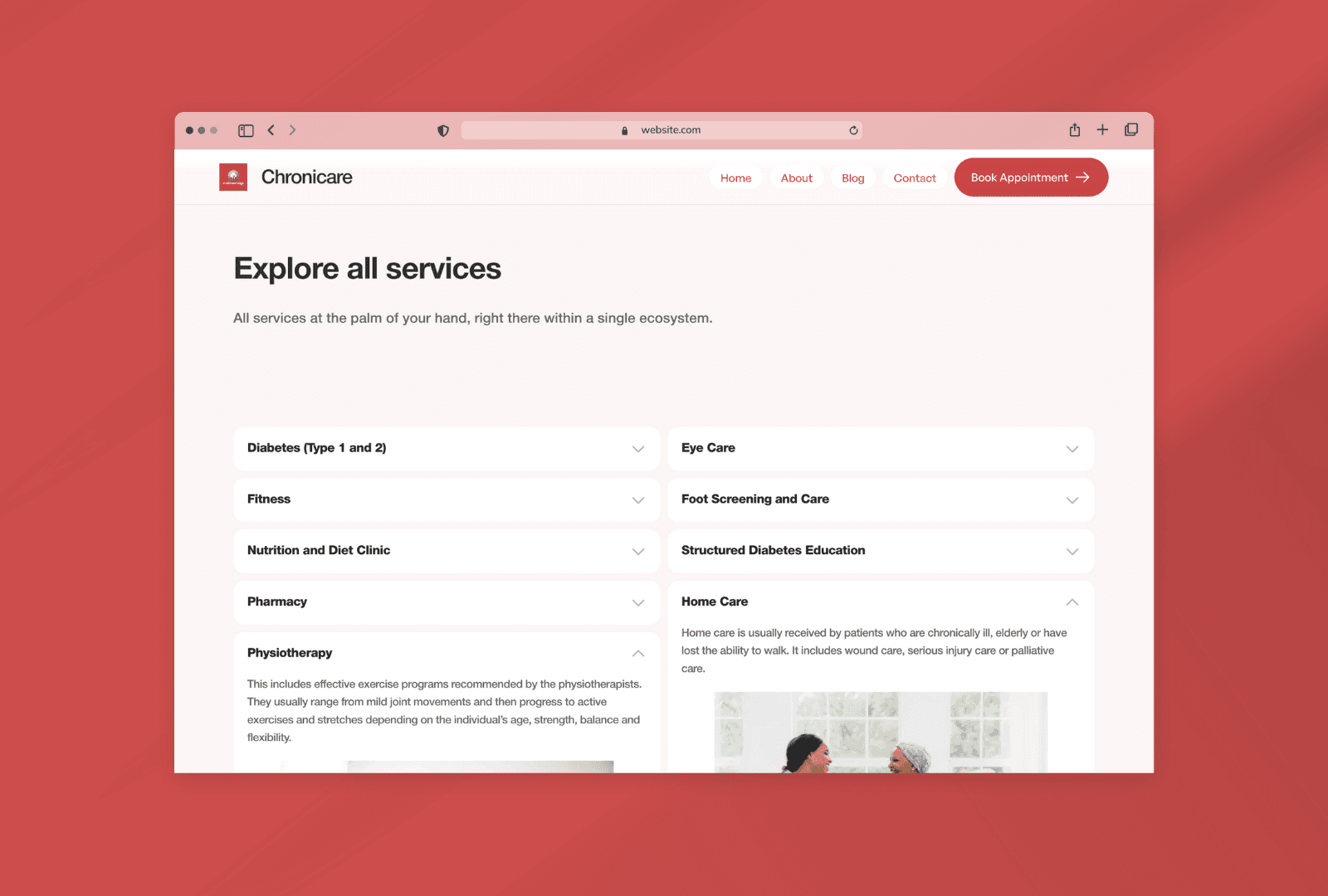
Revamped a Nigerian clinic's website into a mobile-friendly, high-performing platform—fixing UX flaws and boosting conversions and client trust.

Revamped a Nigerian clinic's website into a mobile-friendly, high-performing platform—fixing UX flaws and boosting conversions and client trust.

. solunar . studio . web . agency

Web Design for a Nigerian Clinic

Web Design for a Nigerian Clinic

Overview

A Nigerian health clinic needed a revitalized online presence. Their website was non-responsive, cluttered, and difficult to navigate. CTAs were broken, and the appointment booking flow led users to confusing redirects. The goal was to transform the user experience and bring clarity and functionality to the clinic's digital touchpoint.

Role

We led the end-to-end redesign of the clinic's website. This included UX strategy, wireframing, high-fidelity prototyping, front-end development using Framer, and performance optimization. I also worked closely with the client to gather content and ensure alignment with their updated brand identity.

Challenge

The existing website lacked structure, had poor mobile usability, broken call-to-actions, and insufficient content. Key user journeys like booking an appointment were confusing and frustrating. Additionally, we had to manage delays due to internal client decisions and content constraints.

Solution

  • Content Audit and Strategy

    • Conducted a gap analysis to identify missing content.

    • Reorganized content into clear, logical sections.

    • Optimized all text for readability and SEO.

  • Wireframing and Prototyping

    • Created low-fidelity wireframes to structure the layout.

    • Used the client’s new brand guidelines for high-fidelity designs.

    • Built and tested prototypes with users.

  • Design and Development

    • Designed a fully responsive site using Framer.

    • Enhanced visual hierarchy and interactions for fluid navigation.

    • Integrated lightweight images in WEBP format to improve load speed.

  • User Testing and Optimization

    • Ran usability tests to refine navigation and UI.

Results

  • Enhanced mobile and desktop experience.

  • Increased appointment bookings from fixed CTAs.

  • Boosted brand perception through modern design.

  • Improved SEO rankings with optimized content and structure.

Project details

Client

Chronicare Clinics

Industry

Health Tech

Location

Lagos & Abuja

End Date

Project details

Client

Chronicare Clinics

Industry

Health Tech

Location

Lagos & Abuja

End Date

Our Process

01
Research & Analysis

This includes conducting user interviews and surveys, as well as analyzing usage data or in-app analytics to identify patterns and bottlenecks. Competitor offerings and industry trends are also reviewed to reveal best practices, feature gaps, and opportunities for differentiation.

02
Information Architecture

Insights from research inform the structure of the experience. Core user journeys are mapped out, key tasks are prioritized, and content is organized into clear sections and flows. The goal is to reduce cognitive load, make navigation intuitive, and ensure that users can quickly find and complete their most important actions.

03
Wireframing & Prototyping

The information architecture then translates into low-fidelity wireframes that explore different layout and interaction options. These wireframes evolve into interactive prototypes that simulate real tasks and scenarios.

04
Usability Testing

Usability testing involves observing real users as they attempt to complete key tasks using the prototypes. Their behaviors, questions, and mistakes reveal friction points and areas of confusion. Feedback from these sessions leads to improvements and a more seamless and intuitive experience.

05
Visual Design & Style Guide

Typography, color, spacing, iconography, and components are defined in a style guide or design system. This ensures consistency across screens and makes it easier for teams to extend and maintain the experience over time.

01
Research & Analysis

This includes conducting user interviews and surveys, as well as analyzing usage data or in-app analytics to identify patterns and bottlenecks. Competitor offerings and industry trends are also reviewed to reveal best practices, feature gaps, and opportunities for differentiation.

02
Information Architecture

Insights from research inform the structure of the experience. Core user journeys are mapped out, key tasks are prioritized, and content is organized into clear sections and flows. The goal is to reduce cognitive load, make navigation intuitive, and ensure that users can quickly find and complete their most important actions.

03
Wireframing & Prototyping

The information architecture then translates into low-fidelity wireframes that explore different layout and interaction options. These wireframes evolve into interactive prototypes that simulate real tasks and scenarios.

04
Usability Testing

Usability testing involves observing real users as they attempt to complete key tasks using the prototypes. Their behaviors, questions, and mistakes reveal friction points and areas of confusion. Feedback from these sessions leads to improvements and a more seamless and intuitive experience.

05
Visual Design & Style Guide

Typography, color, spacing, iconography, and components are defined in a style guide or design system. This ensures consistency across screens and makes it easier for teams to extend and maintain the experience over time.

Tools

Ready to turn clicks into customers?

We are one call away to always serve you modern, unique and converting solutions.

Ready to turn clicks into customers?

We are one call away to always serve you modern, unique and converting solutions.

Ready to turn clicks into customers?

We are one call away to always serve you modern, unique and converting solutions.

Create a free website with Framer, the website builder loved by startups, designers and agencies.