Project Details
Project Details
Frontier Technology Radar for Disaster Risk Reduction: An Enterprise Resource Planning (ERP) software
Frontier Technology Radar for Disaster Risk Reduction: An Enterprise Resource Planning (ERP) software
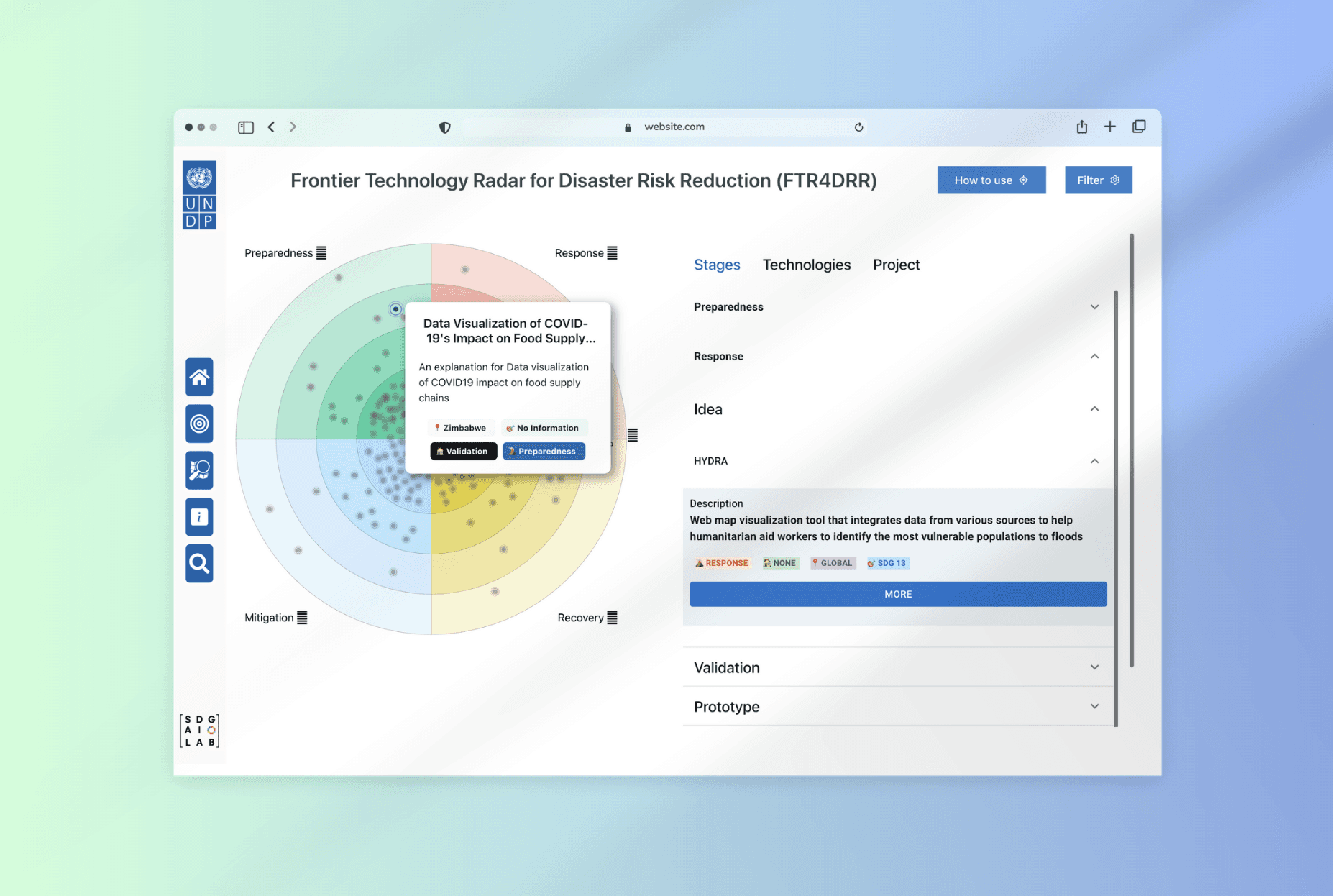
Global Disaster Radar
Global Disaster Radar
Project details
Project details
Our Process
01
Research & Analysis
This includes conducting user interviews and surveys, as well as analyzing usage data or in-app analytics to identify patterns and bottlenecks. Competitor offerings and industry trends are also reviewed to reveal best practices, feature gaps, and opportunities for differentiation.
02
Information Architecture
Insights from research inform the structure of the experience. Core user journeys are mapped out, key tasks are prioritized, and content is organized into clear sections and flows. The goal is to reduce cognitive load, make navigation intuitive, and ensure that users can quickly find and complete their most important actions.
03
Wireframing & Prototyping
The information architecture then translates into low-fidelity wireframes that explore different layout and interaction options. These wireframes evolve into interactive prototypes that simulate real tasks and scenarios.
04
Usability Testing
Usability testing involves observing real users as they attempt to complete key tasks using the prototypes. Their behaviors, questions, and mistakes reveal friction points and areas of confusion. Feedback from these sessions leads to improvements and a more seamless and intuitive experience.
05
Visual Design & Style Guide
Typography, color, spacing, iconography, and components are defined in a style guide or design system. This ensures consistency across screens and makes it easier for teams to extend and maintain the experience over time.

01
Research & Analysis
This includes conducting user interviews and surveys, as well as analyzing usage data or in-app analytics to identify patterns and bottlenecks. Competitor offerings and industry trends are also reviewed to reveal best practices, feature gaps, and opportunities for differentiation.
02
Information Architecture
Insights from research inform the structure of the experience. Core user journeys are mapped out, key tasks are prioritized, and content is organized into clear sections and flows. The goal is to reduce cognitive load, make navigation intuitive, and ensure that users can quickly find and complete their most important actions.
03
Wireframing & Prototyping
The information architecture then translates into low-fidelity wireframes that explore different layout and interaction options. These wireframes evolve into interactive prototypes that simulate real tasks and scenarios.
04
Usability Testing
Usability testing involves observing real users as they attempt to complete key tasks using the prototypes. Their behaviors, questions, and mistakes reveal friction points and areas of confusion. Feedback from these sessions leads to improvements and a more seamless and intuitive experience.
05
Visual Design & Style Guide
Typography, color, spacing, iconography, and components are defined in a style guide or design system. This ensures consistency across screens and makes it easier for teams to extend and maintain the experience over time.






Ready to turn clicks into customers?
We are one call away to always serve you modern, unique and converting solutions.
Ready to turn clicks into customers?
We are one call away to always serve you modern, unique and converting solutions.
Ready to turn clicks into customers?
We are one call away to always serve you modern, unique and converting solutions.